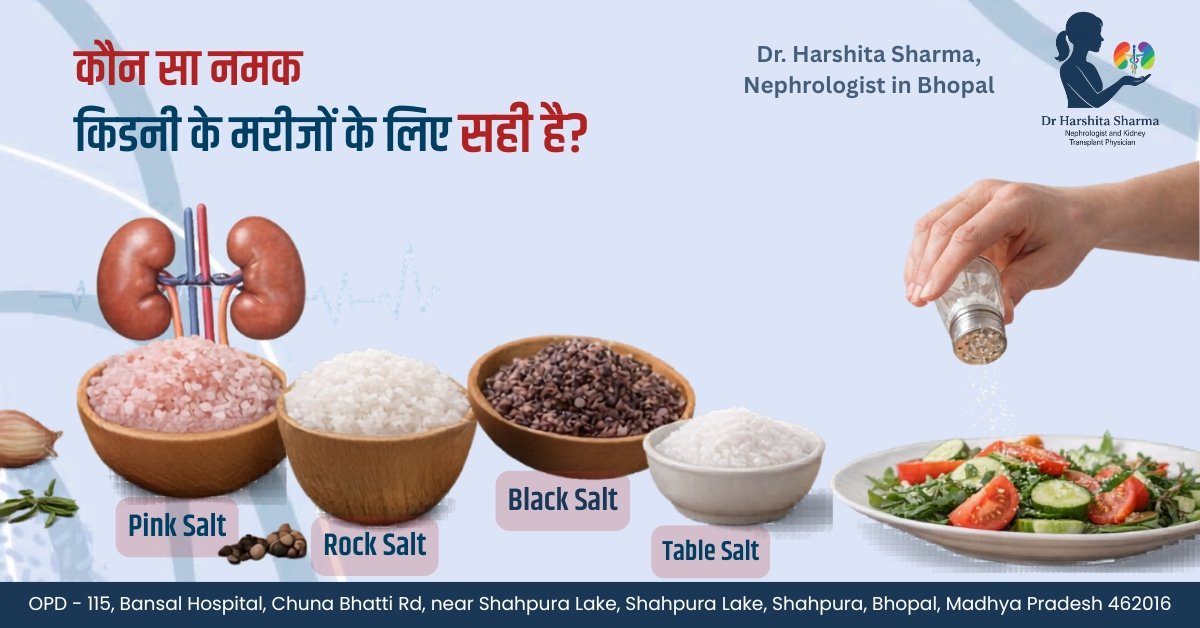

Aaj kal kidney problems bahut common ho rahi hain, aur log aksar diet par dhyaan nahi dete. Salt yaani namak hum daily khate hain, lekin CKD patients ke liye ye ek important topic hai. Zyada namak khane se blood pressure badhta hai aur kidney par extra pressure padta hai. Isi wajah se CKD treatment in Bhopal ke dauran doctors diet control par special focus karte hain. Agar kisi ko kidney problem hai, toh unhe proper chronic kidney disease diet follow karna chahiye. As a kidney specialist in Bhopal, Dr. Harshita Sharma samjhati hain ki right salt choice aur controlled sodium intake kidney health ko protect karne mein important role play karta hai.
Why Salt Intake Matters in Kidney Disease
Salt plays a very important role in maintaining fluid balance and blood pressure in the body. However, for people living with Chronic Kidney Disease (CKD), too much salt can become harmful. When kidneys are weak, they cannot remove excess sodium efficiently. This leads to fluid retention, swelling in the body, and increased blood pressure. Over time, high blood pressure further damages kidney tissues and reduces their filtering ability.
Patients taking CKD treatment in Bhopal are often advised to carefully monitor their salt intake. Excess salt forces damaged kidneys to work harder, which may speed up the progression of kidney disease. Controlling sodium intake helps reduce swelling, improves heart health, and supports better kidney function.
Many people believe that only medicines are enough to manage CKD. However, diet changes are equally important. A balanced chronic kidney disease diet with limited salt intake helps maintain stable blood pressure levels and improves overall treatment outcomes. This is why every experienced nephrologist in Bhopal emphasizes lifestyle and diet modification along with medical treatment.
Reducing salt does not mean eating tasteless food. Patients can use kidney safe condiments to enhance the taste of food. Regular consultation with a kidney specialist in Bhopal helps patients understand safe dietary practices and make healthier choices.
Different Types of Salt and Their Effects on CKD
There are many types of salt available today, and people often get confused about which one is safe for kidney patients. The truth is that most salts contain sodium chloride, and excessive consumption of any type can affect kidney health.
Regular Table Salt
This is the most commonly used salt in households. It contains high sodium content and added iodine. While iodine supports thyroid health, high intake of table salt can increase blood pressure and worsen kidney damage. Patients undergoing CKD treatment in Bhopal should limit regular salt intake to prevent fluid overload and hypertension.
Rock Salt (Sendha Namak)
Rock salt is considered more natural and is often used during fasting. It contains trace minerals but still has significant sodium levels. CKD patients should not assume it is completely safe. A controlled quantity is essential in a proper chronic kidney disease diet.
Sea Salt
Sea salt is marketed as a healthier alternative because it is less processed. However, its sodium content remains similar to table salt. Therefore, excessive use can negatively impact kidney health. A kidney Doctor in Bhopal usually recommends moderation rather than complete dependence on salt substitutes.
Himalayan Pink Salt
Pink salt contains small amounts of minerals like calcium and potassium. Although it looks healthier, it still contributes to sodium intake. Patients should consult a nephrologist in Bhopal before switching to pink salt, especially in advanced CKD stages.
Low-Sodium Salt
Low-sodium salt replaces sodium with potassium. While this may help some people control blood pressure, CKD patients must be cautious. High potassium levels can cause heart complications in kidney disease. Therefore, using low-sodium salt should only be done under guidance from a kidney specialist in Bhopal. Understanding the effects of different salt types helps patients make better dietary decisions and supports successful CKD treatment in Bhopal.
How Much Salt is Safe for CKD Patients?
The amount of salt considered safe for CKD patients depends on the stage of kidney disease, blood pressure levels, and individual health conditions. In general, most nephrologists recommend limiting sodium intake to around 4–5 grams of salt per day, which equals approximately one teaspoon.
For some patients with severe swelling or uncontrolled hypertension, even lower salt intake may be required. During regular follow-ups, a kidney Doctor in Bhopal evaluates lab results and symptoms to decide the exact dietary restriction.
Patients should remember that salt is not only present in food added during cooking. Packaged snacks, bakery items, pickles, sauces, and restaurant meals contain hidden sodium. These can significantly increase daily salt intake without patients realizing it.
To manage salt consumption effectively, CKD patients can follow these practical tips:
- Cook fresh meals instead of processed foods
- Avoid adding extra salt at the dining table
- Choose low-sodium food options
- Drink fluids according to doctor’s advice
- Monitor weight and swelling regularly
Following these steps helps support long-term kidney health and improves outcomes of CKD treatment in Bhopal.
Signs of Excess Salt Intake in CKD
For people living with Chronic Kidney Disease (CKD), too much salt can silently worsen kidney function. Since damaged kidneys are unable to remove extra sodium properly, fluid starts collecting in the body. This can make patients feel uncomfortable and tired. Recognizing early warning signs helps in timely dietary control and better CKD treatment in Bhopal.
Common signs of excess salt intake include:
- Swelling around eyes, feet, and ankles
- Sudden weight gain due to water retention
- Increased blood pressure levels
- Feeling breathless while walking or lying down
- Reduced urine output
- Persistent fatigue and heaviness in the body
If these symptoms appear frequently, it is important to consult a kidney specialist in Bhopal and review dietary habits. Early correction of salt intake can help slow the progression of kidney disease.
Practical Tips to Reduce Salt Intake
Managing salt consumption is one of the most effective steps in following a healthy chronic kidney disease diet. Many patients think reducing salt means eating bland food, but there are several ways to maintain taste while protecting kidney health.
Helpful tips include:
- Cook food fresh instead of relying on packaged meals
- Avoid pickles, papads, chips, and processed snacks
- use kidney safe condiments to enhance the taste of food
- Read food labels to check sodium content
- Limit restaurant and fast-food consumption
- Do not add extra salt after cooking
These simple lifestyle adjustments are commonly advised by every experienced nephrologist in Bhopal. Consistent dietary control improves the effectiveness of CKD treatment in Bhopal and helps patients feel more energetic.
Which Salt is Better for Kidney Patients?
Many people ask which type of salt is safest for kidney problems. The truth is that no salt is completely safe if consumed in excess, because all types contain sodium. However, some practical guidance can help CKD patients make healthier choices.
Points to Remember About Salt in Kidney Disease
- Regular table salt: Should be used in very small quantity because it contains high sodium.
- Rock salt (Sendha namak): Slightly more natural but still needs moderation in kidney disease.
- Sea salt or pink salt: These are often marketed as healthy, but sodium content is still significant.
- Low-sodium salt: May be useful for some patients but can increase potassium levels, so it should only be taken after consulting a kidney Doctor in Bhopal.
For most CKD patients, the best approach is not changing the salt type but reducing total salt intake. A balanced diet planned by a kidney specialist in Bhopal ensures safe sodium levels and supports better kidney protection.
Role of Lifestyle Along with Diet
Diet alone cannot control kidney disease. Lifestyle habits also play a major role in maintaining kidney health. A healthy routine helps improve blood pressure control, blood sugar balance, and overall treatment outcomes.
Important lifestyle practices include:
- Regular light exercise such as walking or yoga
- Maintaining healthy body weight
- Controlling diabetes and hypertension
- Avoiding smoking and alcohol
- Getting adequate sleep and managing stress
- Attending regular follow-up visits
Combining proper lifestyle habits with a low-salt chronic kidney disease diet significantly improves long-term results of CKD treatment in Bhopal.
When to Consult a Kidney Specialist
Kidney problems often develop slowly and may not show clear symptoms in the beginning. Many people ignore early warning signs and visit a doctor only when the condition becomes serious. Consulting a kidney specialist in Bhopal at the right time can help detect kidney disease early, prevent complications, and improve treatment outcomes.
You should consider meeting a nephrologist in Bhopal if you notice the following symptoms or health conditions:
- Swelling in the face, hands, or feet
- Persistent fatigue or weakness
- Changes in urine colour, frequency, or foaming
- High blood pressure that is difficult to control
- Increased creatinine or abnormal kidney test reports
- Long-standing diabetes or hypertension
- Family history of kidney disease
- Recurrent kidney infections or kidney stones
- Loss of appetite, nausea, or unexplained weight changes
Early consultation allows proper diagnosis, lifestyle guidance, and timely planning of treatment. Regular follow-ups with a kidney Doctor in Bhopal help slow the progression of kidney disease and maintain better overall health.
Frequently Asked Questions
1. When should I consult a kidney specialist?
You should consult a kidney specialist in Bhopal if you notice swelling, changes in urine, high creatinine levels, or long-standing diabetes or high blood pressure.
2. Can kidney disease be detected early?
Yes. Early blood and urine tests can help detect kidney problems before symptoms become severe. Visiting a nephrologist in Bhopal at the right time helps prevent complications.
3. Do I need to see a specialist if I have high blood pressure?
If blood pressure remains uncontrolled despite medicines, it is important to consult a kidney Doctor in Bhopal, as high BP can damage kidney function over time.
4. How often should kidney patients visit a nephrologist?
The frequency depends on the stage of kidney disease. Some patients may need visits every 3–6 months, while others require more regular follow-ups.
5. Can lifestyle changes reduce the need for specialist treatment?
Healthy diet, salt control, exercise, and proper diabetes management can slow kidney disease progression. However, regular consultation with a kidney specialist in Bhopal is still important.
6. Are kidney problems common in diabetes patients?
Yes. Diabetes is one of the leading causes of kidney disease. Early screening and timely consultation with a nephrologist in Bhopal help protect kidney health.